Jonathan Shambroom
A working page for two chapters of internet history.
Jonathan was Director of Products at PF.Magic — the San Francisco studio that more or less invented the virtual pet — then went on to lead product at When.com, one of the first web calendars, which AOL acquired in 1999.
Two tabs below. Drop in photos, corrections, and stories as you like.
PF.Magic
San Francisco, 1991–2002 · Inventors of the virtual pet

Founded by Rob Fulop and a small crew in 1991, PF.Magic started life as a hardware company — the cancelled AT&T/Sega online-multiplayer accessory "The Edge." After AT&T pulled out, they pivoted to games. Ballz (1994) was the first hit-shaped object: a fighting game whose characters were made entirely of spheres.
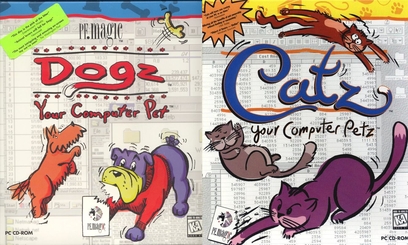
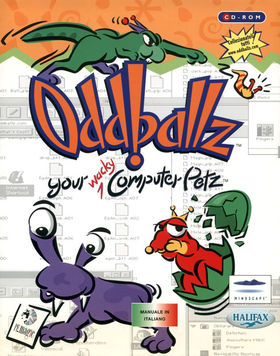
The real breakthrough came when Fulop, after a conversation with a mall Santa, learned that puppies were still the #1 Christmas gift kids asked for. The team reused the Ballz technology to render animals — and shipped Dogz (1995), then Catz (1996). They effectively created the virtual pet genre. Mindscape acquired the studio in 1998 (≈ $15.8M); the Petz/Oddballz/Babyz IP eventually wound up at Ubisoft via the The Learning Company acquisition in 2001, and Ubisoft continued releasing Petz games through 2014.
The "PF" in PF.Magic — per Fulop — stood for "pure f***ing magic," a phrase used at Atari to describe code that worked without anyone quite knowing why.
Stats
Games shipped
- Ballz (1994) — sphere-based fighting game (Genesis, SNES, 3DO). The graphics engine that later powered Dogz.
- Dogz: Your Computer Pet (1995) — the first true desktop virtual pet. ~200k copies in year one.
- Catz: Your Computer Petz (1996) — feline follow-up. Dogz + Catz together passed 1.5M units by early 1998.
- Oddballz (1996) — 13 chimeric/fantasy creatures; one of the first games with online trading and "mutation."
- Petz 2 → Petz 5 (1997–2002) — added breeding, mixed breeds, expanded worlds; Petz 4 (1999) added voice recognition and new species (Pigz, Bunniez).
- Babyz: Your Virtual Bundle of Joy (1999) — 15 adoptable babies in a virtual house; used IBM ViaVoice for speech recognition.
- Max Magic — a CD-i title Fulop has called "a blast to make" despite the platform's small market.
Jonathan's role
Director of Products (shrink-wrapped + online), c. 1994–1998. Shipped the catalog above through the studio's peak years.
Photos & box art

Sources & further reading
- Wikipedia — PF.Magic (founding, history, full game catalog)
- Wikipedia — Petz franchise (release timeline through the Ubisoft era, sales figures)
- Wikipedia — Ballz (1994) (the fighter whose engine became Dogz)
- Wikipedia — Oddballz (13 creatures, online trading)
- Wikipedia — Babyz (ViaVoice integration, virtual house)
- Sega-16 — Rob Fulop interview (Sept 2007) (Edge-16 → Ballz → Dogz pivot in Fulop's own words)
- Digital Press — Rob Fulop interview ("pure f***ing magic" naming story; Atari → Imagic → PF lineage)
- Arcade Attack — Rob Fulop interview (Mar 2017) (Fulop calls PF.Magic the most fulfilling company he worked for)
- Good Deal Games — Rob Fulop interview (career-spanning, PF era covered)
- RobFulop.com — Fulop's own site (bio, photos, project list)
- Wayback Petz — PF.Magic page + studio history (fan archive: studio photos, box art, dev anecdotes)
- Petz Wiki (Miraheze) — PF Magic (most thorough sourced fan-encyclopedia entry)
- MIT Media Lab — "Socially Intelligent Virtual Petz" (academic angle on the AI behind Dogz/Catz)
- "The Rise and Fall of Petz" (YouTube retrospective — overview of the genre)
- MobyGames — PF.Magic (full game catalog, credits, box art)
- Internet Archive — pfmagic.com captures (the studio's own site, 1996–2002)